
Understanding Which Crops Face the Greatest Risk from Hailstorms
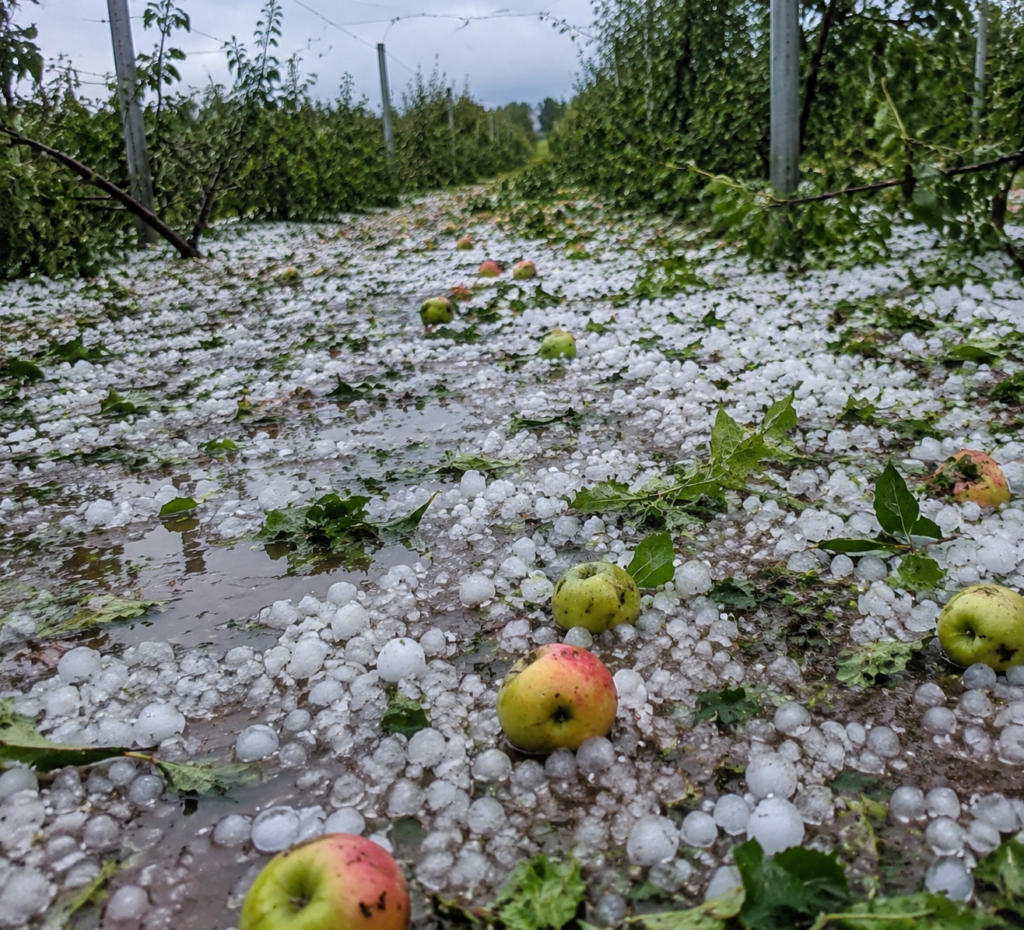
For fruit growers, hail is one of the most feared weather events. Unlike drought, disease, or pest pressure, hail can cause severe damage within minutes. A single storm can reduce fruit quality, lower marketable yields, and significantly impact annual profits.
However, not all fruit crops are affected equally.
Some fruits are naturally more vulnerable because of their thin skins, delicate structure, or high market-quality requirements. Understanding which crops face the greatest hail risk can help growers make informed decisions about orchard protection systems and long-term risk management.
In this article, we’ll explore which fruits are most susceptible to hail damage and how growers can protect their orchards from costly losses.
Why Hail Causes Such Serious Damage
When hailstones strike fruit, the impact can cause:
- Bruising
- Skin punctures
- Surface scars
- Cracks and splits
- Premature fruit drop
Even when fruit remains on the tree, cosmetic damage often reduces its market value.
For growers supplying premium fresh markets, appearance is often just as important as yield.
What Makes a Fruit More Vulnerable to Hail?
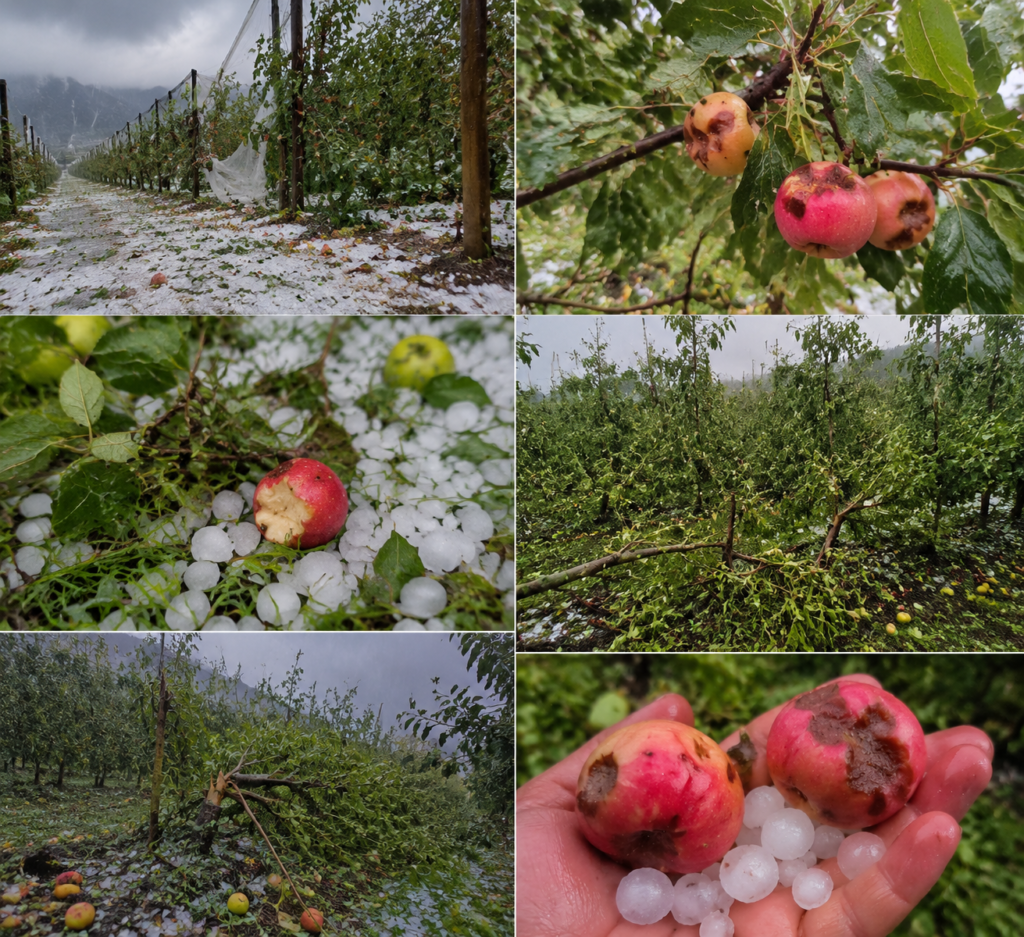
Several factors determine how severely a fruit may be affected by hail.
Thin Skin
Fruits with thin or delicate skins are more likely to crack, bruise, or split when struck by hailstones.
High Market Standards
Some fruits can still be sold after minor cosmetic damage, while others immediately lose value if appearance is affected.
Exposure During Harvest Season
Crops that ripen during storm-prone periods face a greater risk of damage.
Fruit Structure
Larger, softer fruits generally absorb impact less effectively than smaller or firmer fruit.
The Most Hail-Vulnerable Fruit Crops
1. Cherries
Risk Level: Extremely High
Cherries are widely considered one of the most hail-sensitive fruit crops.
Reasons include:
- Thin skin
- High fresh-market standards
- Short harvest window
- High economic value
Even small hailstones can cause:
- Surface bruising
- Skin cracking
- Fruit rejection
For sweet cherry growers, a single hailstorm can reduce the value of an entire harvest.
Common Grower Concern
“One storm can ruin months of work.”
2. Blueberries
Risk Level: High
Blueberries are relatively small but highly susceptible to bruising.
Hail can cause:
- Soft fruit
- Surface damage
- Reduced shelf life
Since blueberries are often sold fresh, maintaining fruit appearance and firmness is essential.
3. Table Grapes
Risk Level: High
Table grapes require excellent visual quality.
Hail can cause:
- Split berries
- Cluster damage
- Increased disease pressure
Damaged grape skins often become entry points for fungal infections.
This can create additional losses beyond the initial storm damage.
4. Apples
Risk Level: Moderate to High
Apples are somewhat more resistant than cherries or grapes, but they remain highly vulnerable from a commercial perspective.
Common hail damage includes:
- Surface dents
- Scars
- Skin punctures
While apples may remain edible, visible defects often reduce their grade and market price.
For export-oriented growers, cosmetic quality is critical.
5. Pears
Risk Level: Moderate to High
Pears face similar challenges to apples.
Hail can lead to:
- Fruit bruising
- Surface scars
- Reduced storage quality
Even minor damage can affect pack-out rates and profitability.
6. Peaches and Nectarines
Risk Level: Extremely High
Stone fruits such as peaches and nectarines have soft skins that are particularly vulnerable.
Hail often causes:
- Deep bruising
- Skin tearing
- Fruit drop
Because these fruits rely heavily on visual appeal, damage can dramatically reduce market value.
7. Plums
Risk Level: High
Plums can experience:
- Skin cracking
- Surface bruising
- Increased disease susceptibility
Premium plum varieties are especially vulnerable close to harvest.
Which Crops Suffer the Highest Financial Losses?
The most financially vulnerable fruits are typically:
| Fruit | Physical Vulnerability | Economic Impact |
|---|---|---|
| Cherries | Very High | Very High |
| Peaches | Very High | High |
| Nectarines | Very High | High |
| Blueberries | High | High |
| Table Grapes | High | High |
| Apples | Moderate | High |
| Pears | Moderate | Moderate |
While apples may tolerate damage better physically, their large production scale means financial losses can still be substantial.
How Growers Protect Hail-Sensitive Crops
Because hail cannot be prevented, successful growers focus on reducing exposure.
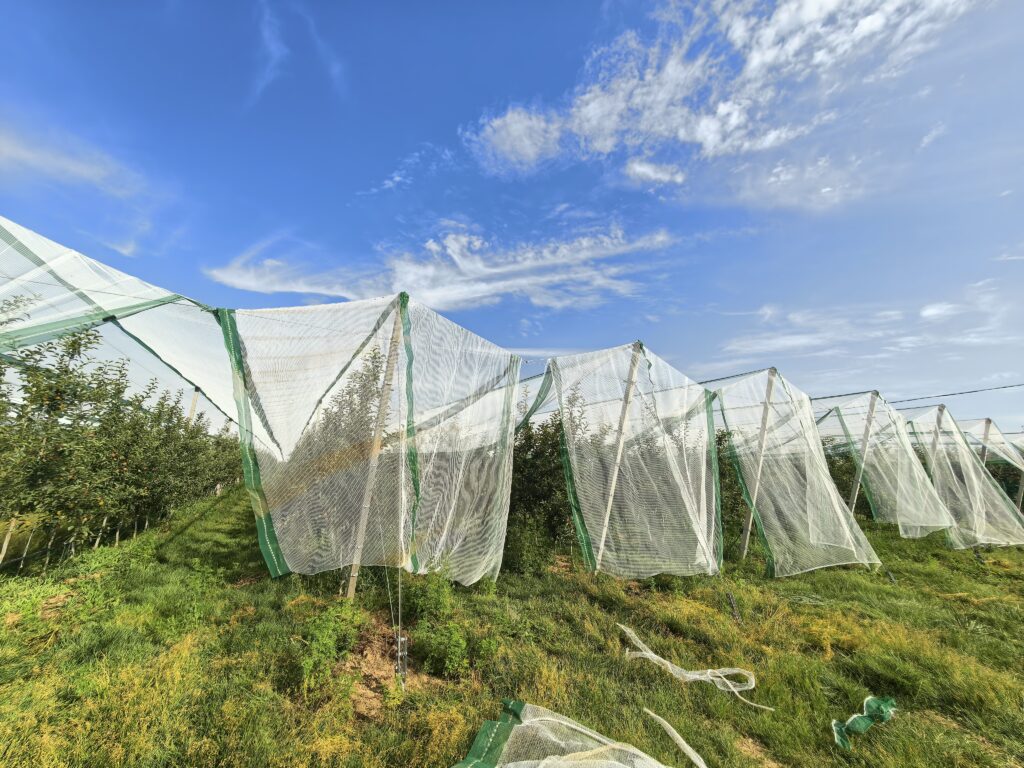
Anti-Hail Net Systems
The most effective solution is installing anti-hail nets.
These systems:
- Absorb impact energy
- Prevent direct fruit strikes
- Protect leaves and branches
- Reduce crop losses
Modern anti-hail systems are widely used in commercial orchards across Europe, North America, South America, Australia, and New Zealand.
Multi-Functional Protection Structures
Many growers combine:
- Anti-hail nets
- Rain covers
- Bird protection
- Insect exclusion systems
This approach maximizes protection while improving overall orchard management.
Risk-Based Orchard Planning
Growers increasingly evaluate:
- Local hail frequency
- Historical weather patterns
- Fruit value
- Return on investment
Higher-value crops often justify protection infrastructure much sooner.
Is Hail Protection Worth the Investment?
Many growers ask whether anti-hail systems are worth the cost.
The answer often depends on one question:
What would a single severe hailstorm cost?
For premium fruit crops such as cherries, blueberries, grapes, and peaches, one major storm can result in losses far exceeding the cost of protection.
As weather patterns become increasingly unpredictable, many growers view orchard protection systems as an essential business investment rather than an optional expense.
Why More Fruit Growers Are Installing Anti-Hail Nets
Several trends are driving adoption worldwide:
- Increasing frequency of extreme weather
- Rising fruit production costs
- Higher quality standards
- Greater export opportunities
- Demand for consistent yields
Growers are realizing that protecting fruit quality is often more profitable than recovering from weather damage.
Conclusion
While hail can damage nearly any fruit crop, some fruits are significantly more vulnerable than others.
Cherries, peaches, nectarines, blueberries, grapes, apples, and pears all face varying degrees of risk, with cherries and stone fruits among the most susceptible.
For growers producing high-value fruit, hail protection has become an important part of modern orchard management.
By investing in anti-hail net systems and integrated orchard protection structures, growers can reduce risk, protect fruit quality, and improve long-term profitability.
Looking for a Customized Anti-Hail Protection Solution?
We design and install customized orchard protection systems for fruit growers worldwide.
Our solutions include:
- Anti-hail net systems
- Rain cover structures
- Retractable orchard covers
- Bird protection nets
- Multi-functional orchard protection systems
Every solution is tailored to your crop type, climate conditions, orchard layout, and production goals.
Contact us today to discuss your orchard protection project.