
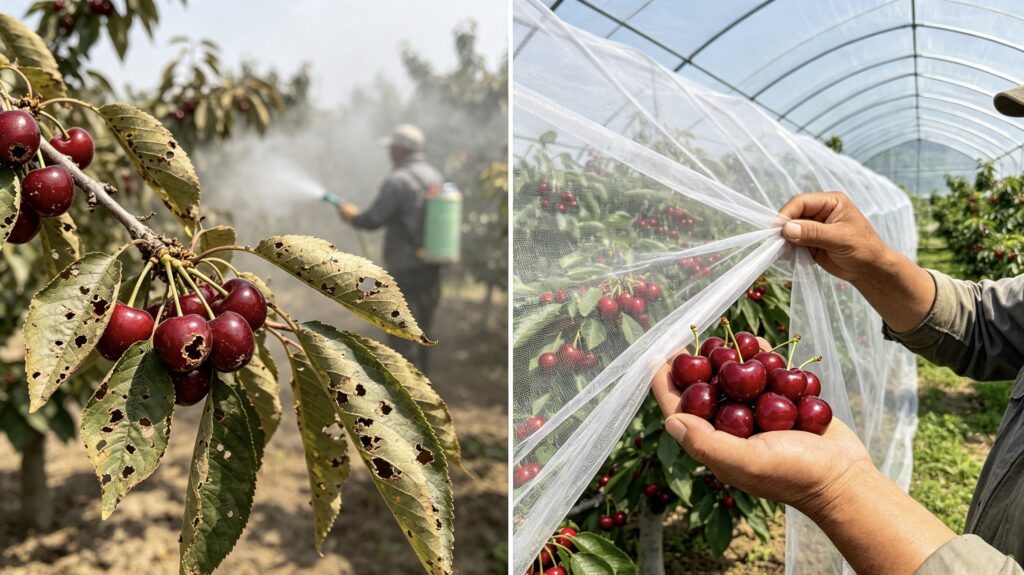
Managing Orchard Insect Challenges While Minimizing Pesticide Use
Insect pests are a persistent challenge for fruit growers. While chemical pesticides can reduce insect populations, overreliance on chemicals can lead to:
- Pest resistance
- Environmental contamination
- Increased production costs
- Market restrictions for export crops
Modern growers are increasingly seeking sustainable alternatives to maintain fruit quality and yield without excessive chemical use. Effective orchard management, physical barriers, and integrated pest strategies allow growers to reduce insect pressure while protecting the environment and profitability.
Understanding the Problem
Common insect pests in orchards include:
- Aphids: Feed on leaves, transmit viruses.
- Mites: Cause leaf damage and reduced photosynthesis.
- Fruit flies: Lay eggs inside fruit, causing rot.
- Codling moths: Target apples and pears, leading to fruit loss.
- Leafrollers: Affect buds, leaves, and young fruits.
Without effective control, these pests can:
- Reduce yield
- Damage fruit appearance
- Increase post-harvest losses
- Lead to higher pesticide use
Why Reducing Chemical Use Matters
Excessive pesticide use has several drawbacks:
- Pest Resistance
- Repeated applications can make pests resistant to common chemicals.
- Resistance leads to decreased effectiveness and the need for stronger chemicals.
- Environmental Impact
- Pesticides can contaminate soil, water, and non-target species.
- Beneficial insects, birds, and pollinators are often harmed.
- Regulatory and Market Pressure
- Export markets often require low pesticide residues.
- Sustainable farming certifications demand reduced chemical usage.
- Cost
- Pesticides represent a significant portion of annual production costs.
- Reducing use lowers overall expenses.
Alternative Strategies to Reduce Insect Pressure
1. Insect Netting
Physical exclusion is one of the most effective methods to reduce insect pressure.
- Nets prevent pests from reaching fruit.
- Can target specific insects (e.g., fruit flies).
- Reduces reliance on chemical sprays.
Benefits:
- Protects fruit quality
- Long-term effectiveness
- Compatible with other pest management strategies
2. Integrated Pest Management (IPM)
IPM combines monitoring, biological control, and selective chemical use.
- Monitoring: Trap insects to assess pressure levels.
- Biological control: Introduce predators or parasites (e.g., ladybugs for aphids).
- Targeted sprays: Apply chemicals only when necessary.
Benefits:
- Reduces chemical use
- Maintains beneficial insect populations
- Supports sustainable practices
3. Orchard Hygiene and Cultural Practices
Proper orchard maintenance can significantly reduce insect problems:
- Remove fallen or damaged fruit to prevent breeding sites.
- Prune trees to improve airflow and reduce pest habitat.
- Rotate crops or interplant to disrupt pest cycles.
4. Cover Crops and Habitat Management
- Planting beneficial cover crops attracts predators like birds and predatory insects.
- Enhances biodiversity and reduces pest outbreaks naturally.
5. Timing and Targeting Sprays
If chemical application is necessary:
- Apply at times when pests are most vulnerable.
- Focus on target pests rather than blanket coverage.
- Use selective products that minimize harm to beneficial insects.
The Role of Insect Nets in Modern Orchards
Physical barriers such as insect netting are increasingly common in high-value orchards:
- Fruit fly exclusion: Prevents egg-laying in soft fruits.
- Codling moth reduction: Reduces infestation in apples and pears.
- Pollinator-friendly options: Some nets allow bees while excluding pests.
- Long-term ROI: Reduces chemical costs and improves marketable yield.
Conclusion
Reducing insect pressure without overusing chemicals is both feasible and economically advantageous. By combining physical exclusion, IPM, and sustainable orchard practices, growers can:
- Protect fruit quality
- Maintain yield
- Reduce pesticide costs
- Comply with regulatory and market requirements
For commercial orchards aiming for high-quality fruit and sustainable production, insect netting combined with integrated pest management is the most effective strategy.