
Find the Right System for Your Orchard and Climate Conditions
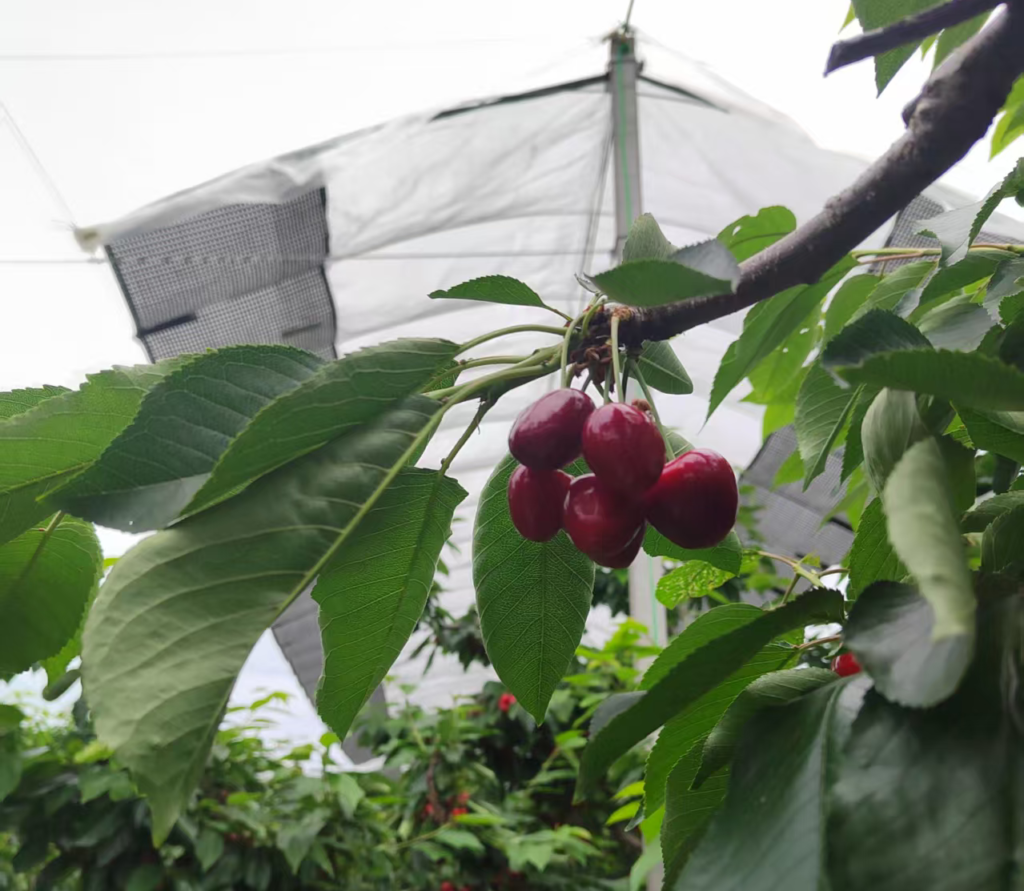
Cherry production is one of the most profitable sectors in modern fruit farming, but it is also among the most weather-sensitive. Rainfall during the ripening period can cause severe fruit cracking, reduce marketable yields, and significantly impact orchard profitability.
As climate conditions become increasingly unpredictable, more growers are investing in rain cover systems to protect their harvests and maintain premium fruit quality.
However, not all rain cover systems are the same. Choosing the right solution depends on your climate, orchard layout, production goals, and budget.
This guide compares the most common rain cover systems used in commercial cherry orchards and helps growers determine which option best fits their operation.
Why Rain Protection Is Essential for Cherries
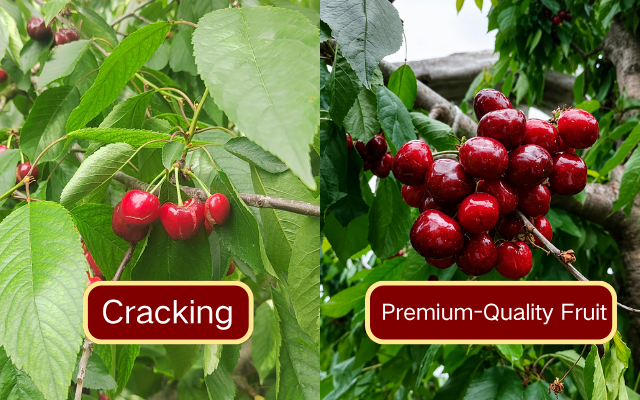
Cherries are particularly vulnerable to rain during the final weeks before harvest.
When mature fruit absorbs excess moisture, internal pressure increases rapidly, causing the skin to split. Even minor cracking can make cherries unsuitable for fresh-market sales and export programs.
Without protection, growers may experience:
- Significant fruit cracking losses
- Reduced fruit quality and firmness
- Lower market prices
- Increased disease pressure
- Unstable annual production
A well-designed rain cover system minimizes these risks and creates a more controlled orchard environment.
Types of Rain Cover Systems Available
Several rain protection solutions are available for cherry orchards. Each system offers different advantages depending on local growing conditions.
Fixed Rain Cover Systems
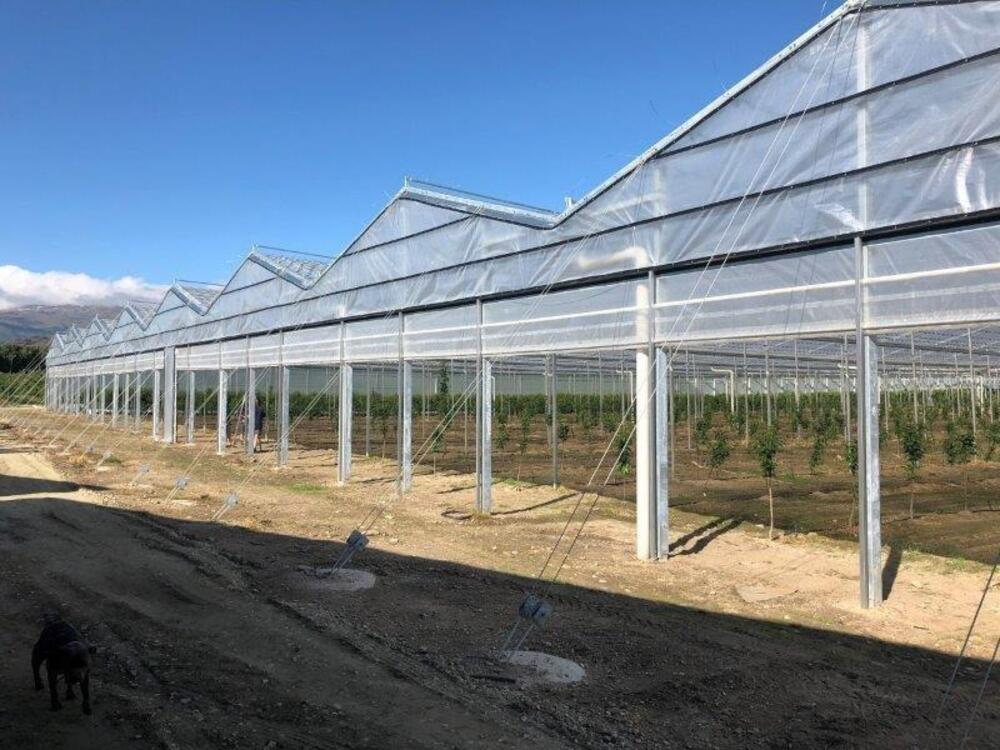
Fixed rain covers remain installed throughout the growing season and provide continuous protection.
Advantages
- Reliable rain protection
- Lower maintenance requirements
- Strong structural stability
- Suitable for regions with frequent rainfall
Limitations
- Reduced flexibility
- Less control over ventilation
- Potential heat buildup during warm periods
Best Applications
Fixed systems are ideal for growers operating in areas where rain events occur regularly and long-term protection is the primary objective.
Retractable Rain Cover Systems
Retractable systems allow growers to open or close the cover depending on weather conditions.
Advantages
- Excellent ventilation
- Better humidity management
- Improved temperature control
- Greater operational flexibility
- Enhanced fruit quality
Limitations
- Higher initial investment
- More complex operation
- Additional maintenance requirements
Best Applications
Retractable systems are widely used in premium export orchards where fruit quality and environmental control are top priorities.
Tunnel-Style Rain Covers
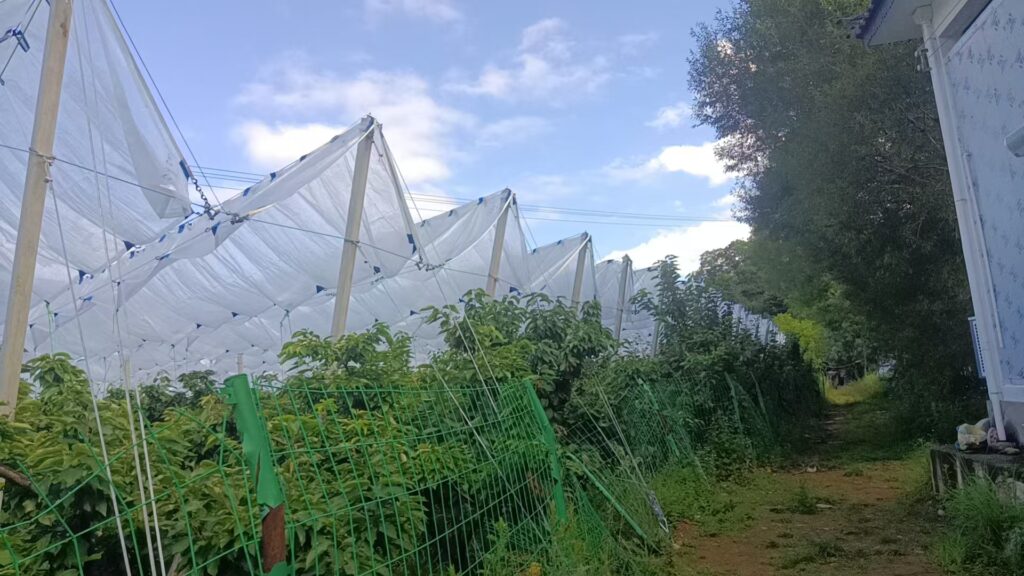
Tunnel systems create a protected growing environment over individual rows.
Advantages
- Cost-effective for smaller orchards
- Quick installation
- Good rain protection
Limitations
- Limited airflow if not properly designed
- Less suitable for large commercial operations
- Potential humidity accumulation
Best Applications
Tunnel systems are often used in smaller farms, trial projects, and young orchard developments.
Multi-Functional Protection Systems
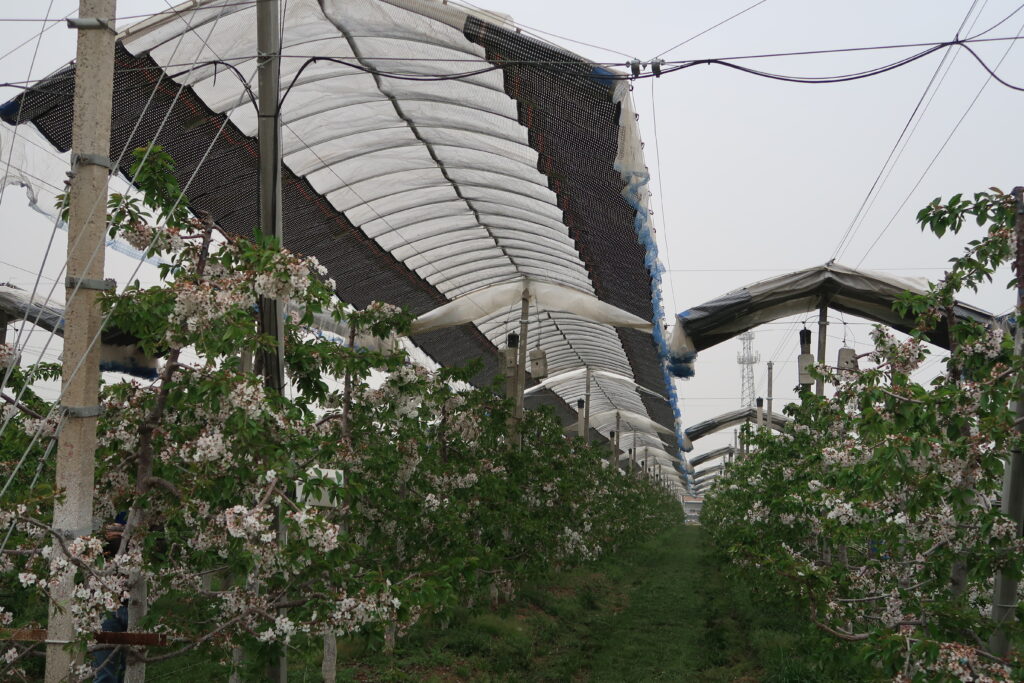
Modern orchard protection structures can combine several protective functions within one system.
These systems may provide:
- Rain protection
- Hail protection
- Bird exclusion
- Insect management
- Shade control
Advantages
- Year-round protection
- Reduced weather-related losses
- Higher long-term return on investment
Best Applications
High-value commercial orchards targeting premium domestic and export markets.
Comparison of Rain Cover Systems
| Feature | Fixed Cover | Retractable Cover | Tunnel Cover |
|---|---|---|---|
| Rain Protection | Excellent | Excellent | Good |
| Ventilation | Moderate | Excellent | Moderate |
| Climate Control | Basic | Advanced | Basic |
| Installation Cost | Medium | High | Low |
| Maintenance | Low | Medium | Low |
| Orchard Scale | Medium-Large | Medium-Large | Small-Medium |
| Export Fruit Production | Good | Excellent | Moderate |
For most professional cherry producers, retractable systems provide the highest level of environmental control and fruit quality protection.
Which System Is Best for Your Orchard?
The best rain cover system depends on several key factors.
Climate Conditions
Growers in regions with frequent rainfall should prioritize maximum weather protection.
Areas with hot summers may benefit from retractable systems that improve airflow and reduce heat stress.
Orchard Size
Large commercial orchards often require durable structural systems capable of protecting extensive planting areas.
Smaller farms may find tunnel-style systems more economical.
Labor Availability
Retractable systems require active management but provide superior flexibility.
Growers with limited labor resources may prefer fixed structures.
Market Requirements
If your orchard supplies export markets, maintaining premium fruit appearance and consistency becomes critical.
Advanced rain cover systems can help achieve these quality standards year after year.
Key Factors to Consider Before Investing
Before selecting a rain cover system, growers should evaluate:
Local Weather Risks
- Rainfall frequency
- Wind exposure
- Hail occurrence
- Humidity levels
Orchard Characteristics
- Tree height
- Row spacing
- Terrain conditions
- Irrigation layout
Long-Term Goals
- Domestic sales
- Export production
- Premium fruit markets
- Yield stability
The most successful projects begin with a customized design that considers both current challenges and future expansion plans.
The Long-Term Benefits of Cherry Rain Covers
Professional rain cover systems offer benefits beyond simple weather protection.
Growers often report:
- Higher percentages of premium-grade fruit
- Reduced cracking losses
- Improved harvest consistency
- Better labor planning
- Increased orchard profitability
As weather patterns continue to change, orchard protection infrastructure is becoming a strategic investment rather than a seasonal expense.
Conclusion
There is no universal solution for every cherry orchard. The best rain cover system depends on climate conditions, production goals, orchard size, and market requirements.
For growers focused on premium fruit quality and long-term profitability, modern retractable rain cover systems often provide the greatest advantages. Fixed and tunnel systems remain effective options for specific climates and operational needs.
A carefully designed protection system can help secure harvest quality, reduce weather-related risks, and support sustainable orchard growth for years to come.
Looking for a Customized Cherry Rain Protection Solution?
Our team specializes in:
- Cherry rain cover systems
- Retractable orchard protection structures
- Anti-hail net solutions
- Multi-functional orchard protection systems
- Custom orchard engineering projects
We design solutions based on your climate, orchard layout, fruit variety, and production objectives.
Contact us today to discuss the best rain protection system for your cherry orchard.
Pingback: How Much Money Do Growers Lose to Bird Damage? | Orchard Protection Guide