
Protect Your Cherries from Hail Damage and Secure Your Profits
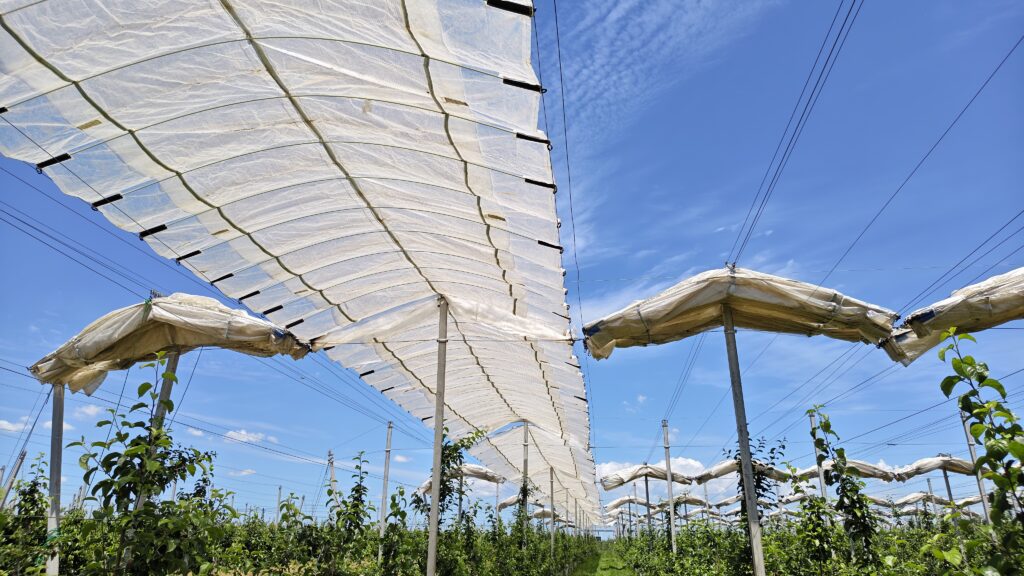
Cherry production is one of the highest-value sectors in fruit farming, but it is also one of the most vulnerable to extreme weather events. Among these threats, hailstorms can cause some of the most devastating losses.
A single hail event lasting only a few minutes can damage fruit, leaves, branches, and even reduce next season’s productivity. For growers producing premium fresh-market cherries, hail damage can turn an excellent harvest into a financial disaster.
As climate conditions become increasingly unpredictable, more orchard operators are investing in anti-hail net systems to protect their crops and stabilize long-term production.
But are anti-hail nets truly worth the investment?
This guide examines the risks, benefits, and return on investment of anti-hail protection systems for commercial cherry orchards.
The Growing Hail Risk for Cherry Growers
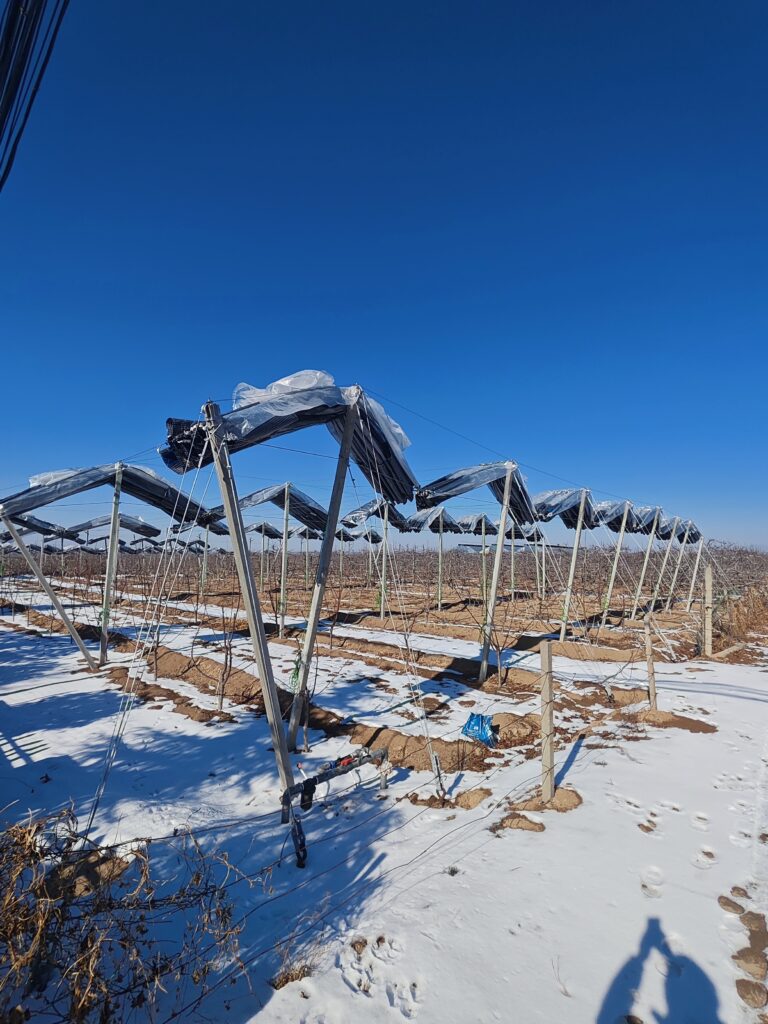
Over the past decade, many cherry-growing regions have reported an increase in severe weather events.
Key production areas such as:
- Spain
- Italy
- Turkey
- Poland
- Chile
- United States
have all experienced damaging hailstorms during critical growing periods.
Several factors contribute to this increasing risk:
Climate Variability
More frequent weather extremes create unstable growing conditions.
Larger Hail Events
Storm systems are producing larger hailstones capable of causing significant fruit damage.
Harvest Season Vulnerability
Cherry harvest often coincides with late spring and early summer storm activity.
For orchard operators, relying solely on favorable weather is becoming increasingly risky.
How Hail Damages Cherries
Unlike some weather threats that gradually reduce yield, hail can cause immediate and severe losses.
Fruit Damage
Hailstones strike the fruit surface directly, causing:
- Skin punctures
- Bruising
- Cracking
- Surface scars
Even minor marks can prevent cherries from being sold as premium fresh fruit.
Tree Damage
Severe hail can also damage:
- Leaves
- Shoots
- Young branches
- Flower buds
This affects not only the current harvest but also future production potential.
Disease Pressure
Damaged fruit and plant tissue create entry points for diseases and fungal infections.
Common problems include:
- Fruit rot
- Bacterial canker
- Secondary fungal infections
This increases management costs and further reduces marketable yields.
Types of Anti-Hail Nets Explained
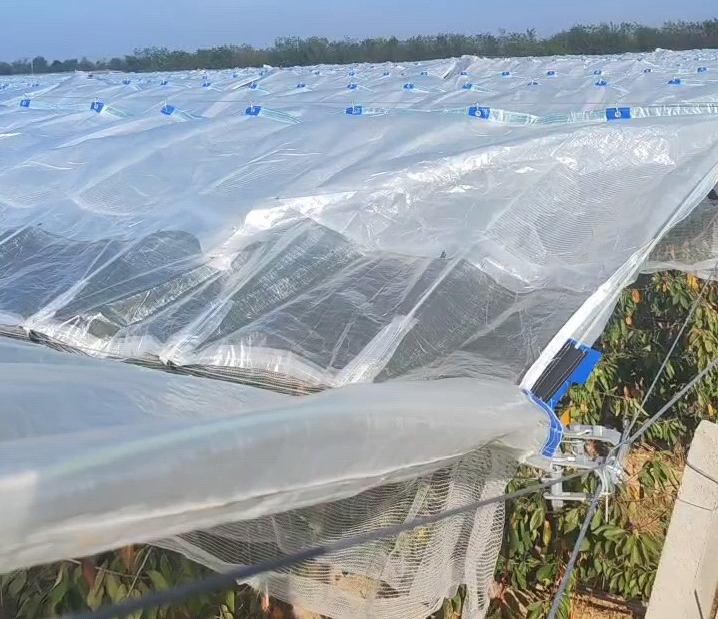
Modern anti-hail systems are designed to absorb and disperse the impact of hail before it reaches the crop.
Several options are available depending on orchard conditions and protection goals.
Drape Net Systems
Drape nets are installed directly over tree rows and provide basic hail protection.
Advantages
- Lower installation cost
- Easy deployment
- Suitable for smaller orchards
Limitations
- Limited structural strength
- Reduced long-term durability
Supported Net Structures
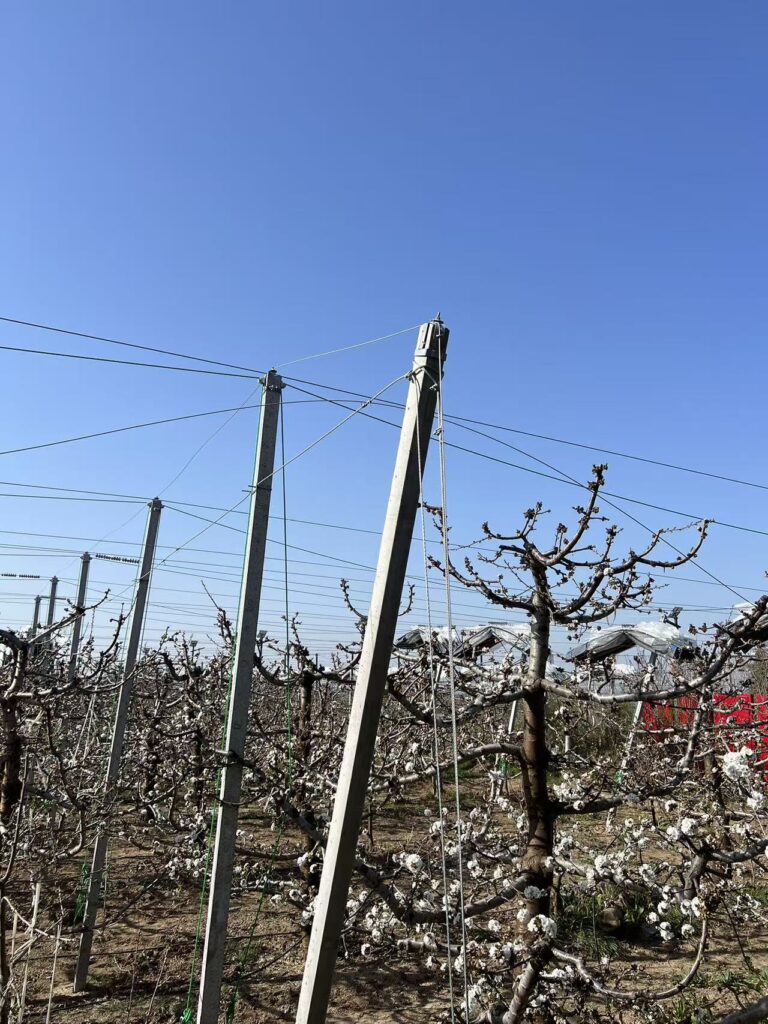
These systems use poles, cables, and tensioned netting to create a permanent protective canopy.
Advantages
- Strong hail protection
- Better durability
- Suitable for commercial orchards
Best For
- Medium and large-scale cherry operations
- Export-oriented production
Multi-Function Protection Systems
Many modern structures combine:
- Anti-hail netting
- Rain protection
- Bird exclusion
- Insect management
These integrated systems offer year-round protection and maximize return on investment.
Black Net vs White Net: Which Is Better?
One of the most common questions growers ask is whether black or white netting is the better choice.
The answer depends on local climate conditions and production goals.
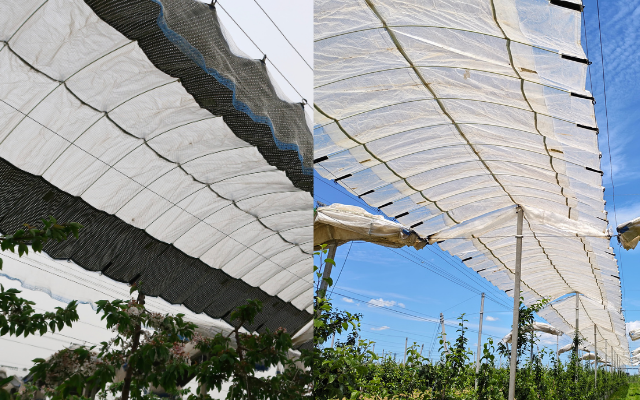
Black Anti-Hail Nets
Benefits
- Reduce excessive sunlight
- Lower orchard temperatures
- Reduce heat stress
Best For
- Hot climates
- Regions with intense summer sun
White Anti-Hail Nets
Benefits
- Better light diffusion
- Improved visibility during orchard operations
- More balanced canopy lighting
Best For
- Moderate climates
- High-density orchard systems
Which Option Should You Choose?
A professional orchard assessment should consider:
- Solar radiation levels
- Local temperatures
- Tree spacing
- Variety characteristics
The best net color is the one that balances protection with optimal growing conditions.
Combining Hail Nets with Rain Covers
Many premium cherry growers now combine anti-hail net systems with rain protection structures.
This approach creates a comprehensive orchard protection solution.
Benefits Include
Protection from Multiple Weather Threats
Growers are protected from:
- Hail
- Heavy rain
- Wind damage
- Excessive sun exposure
Improved Fruit Quality
Combined systems help maintain:
- Better skin finish
- More uniform color
- Higher firmness
- Increased shelf life
Greater Yield Stability
By reducing weather-related losses, growers can achieve more predictable annual production.
Why Integrated Protection Is Becoming Popular
Modern cherry production is increasingly focused on risk management.
Rather than protecting against a single weather threat, growers are investing in systems that provide multiple layers of protection throughout the season.
Is It Worth the Investment?
The true value of an anti-hail system becomes clear when compared to the potential losses caused by a major storm.
Consider the following:
Without Protection
A severe hailstorm can cause:
- Significant fruit loss
- Lower fruit grades
- Increased disease pressure
- Reduced future productivity
With Protection
Growers benefit from:
- Consistent fruit quality
- Higher marketable yields
- Better export performance
- Reduced weather risk
- Greater confidence in long-term planning
For high-value cherry orchards, avoiding a single major hail event can often recover a large portion of the installation investment.
Long-Term Economic Benefits
Anti-hail systems should not be viewed solely as a cost.
They are a long-term investment in orchard stability.
Benefits often include:
- Higher percentages of premium fruit
- More stable annual revenue
- Improved orchard asset value
- Reduced weather-related uncertainty
As extreme weather events become more common, protection infrastructure is becoming an essential component of professional orchard management.
Conclusion
Hail damage represents one of the most serious risks facing modern cherry growers. A single storm can destroy years of hard work and significantly impact profitability.
Anti-hail net systems provide an effective and proven method of protecting orchards from weather-related losses. Whether used alone or combined with rain cover systems, they help growers maintain fruit quality, protect yields, and improve long-term production stability.
For commercial cherry operations focused on premium fruit production, anti-hail protection is increasingly becoming a strategic investment rather than an optional upgrade.
Looking for a Customized Cherry Protection Solution?
We provide customized orchard protection systems including:
- Anti-hail net systems
- Cherry rain cover structures
- Multi-functional orchard protection solutions
- Retractable protection systems
- Climate-adapted orchard engineering
Our technical team can design a solution based on your orchard layout, local weather risks, and production goals.
Contact us today to discuss the best protection strategy for your cherry orchard.